
TaxPro Experts
+91 80763 54833
info@taxproexperts.in


Private Limited Company registration is the most popular and established legal structure for businesses in India. A minimum of two members is required to establish a private limited company, and it can have a maximum of fifty members. In private limited companies, directors have limited liability towards creditors. In case of any default, banks and creditors can only claim and sell the company’s assets, not the personal assets of the directors. Most start-ups and growing businesses prefer a private limited company as it allows easy fundraising from outside, limits the liabilities of its shareholders, and supports them in offering employee stock options to attract top talent.
A Private Limited Company holds benefits such as limited liability, fewer compliances under the Companies Act 2013, ease of formation and winding up, separation of ownership and management, etc. Distinctive features of a private limited company, like separate legal entity status, limited liability protection to shareholders, the ability to raise equity funds, and perpetual existence, make it the most preferred business entity type for small and medium-sized businesses that are family-owned or professionally managed.
If you want to register your own company in India, then TaxPro Experts provides services related to company registration. You will be thoroughly guided through the new company formation procedure, and our team of experts will assist you with all the
Private Limited Companies offer many advantages. By understanding these benefits, you can easily understand why Private Limited Company registration in India is a good choice.

The main benefit of setting up a Private Limited Company is that the liability of its members is limited. This means they don’t have to sell their assets at the time of liquidation. The liability is limited only to the portion of shares held by the members in the company.

A Private Limited Company has a separate legal identity from its members. It is responsible for its own assets, liabilities, debtors, and creditors. In case of financial loss, creditors cannot claim the personal assets of any member, offering security to its members.

In India, companies are registered through the Registrar of Companies under the Companies Act, 2013. Their details are available on the Ministry of Corporate Affairs (MCA) portal, adding transparency and building trust among stakeholders and the public.

A Private Limited Company enjoys perpetual succession, meaning the existence of the company is not affected by the death or departure of any of its members. The company continues to exist until it is legally dissolved.

Under Section 80-IAC of the Income Tax Act, Private Limited Companies are eligible for a 100% tax exemption for 3 consecutive financial years. This is considered one of the biggest tax benefits provided to startups in India.

Compared to public companies, private limited companies have more flexibility in raising funds. They can generate funds through private placements or angel investors without offering securities to the general public.
However, acquiring this business entity is not a small task, as there are various formalities and requirements to be met for a Private Limited Company.
If you want to register any type of company in India—including Private Limited Company, Public Limited Company, or One Person Company—TaxPro Experts provides complete assistance for company registration. Click here to read the full process of how to register a company in India.
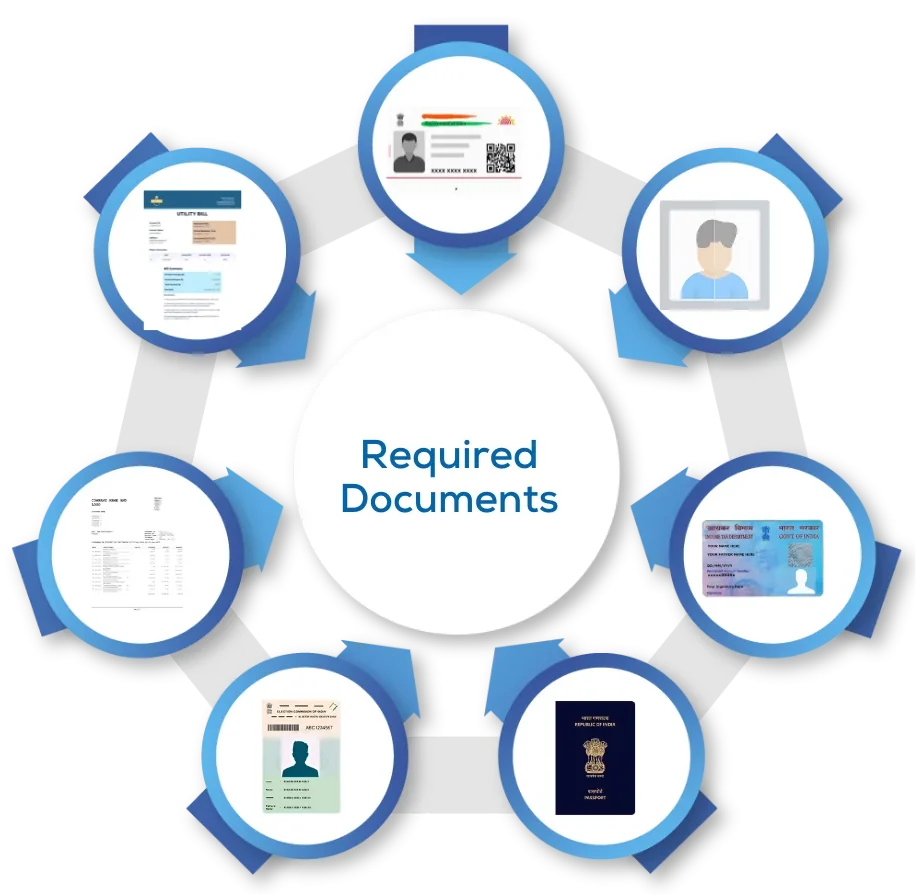
Essential private limited company registration documents for filing SPICe+ form (INC-32) are mentioned below:
Private Limited Company Registration A private limited company is a privately held business entity for small-scale businesses. This type of company restricts owner’s responsibility to their shareholdings, can’t have more than 200 shareholders, and never allows shareholders to trade shares publicly.
Small to medium-sized businesses usually choose to register as a private limited company. This business structure is regulated under the Companies Act 2013 under the MCA regulations. This type of company must have at least two shareholders and two directors. One director should be an Indian resident.
A private limited company is popular due to its benefits, such as simple formation, limited liability protection, and easy maintenance. Moreover, it’s also a separate legal entity. Any prospective entrepreneur can start this type of company to enjoy legal protection, effective management, and flexibility in ownership.
We are happy to help you. Please feel free to contact us today for high-quality and cost-effective services.
Private limited company incorporation offers multiple benefits like flexibility, limited liability, and continuous legal existence. Here are some key advantages of forming a Private Limited Company with TaxPro Experts:
A Private Limited Company has its own legal identity. It can own property, sign contracts, and face legal actions independently. Personal assets of shareholders remain safe.
Shareholders are responsible only for the unpaid portion of their shares. Their personal assets stay protected from company losses or debts.
With TaxPro Experts, you can build trust and credibility. Registered companies easily attract funding from investors, banks, and financial institutions.
The company continues to exist despite changes in shareholders or directors. It stays active until it’s legally closed.
Private Limited Companies can raise funds through equity or investors. TaxPro Experts helps simplify the entire fundraising process.
Shares of the company can be easily transferred, allowing flexibility in ownership. TaxPro Experts will assist you throughout the share transfer process.
The registration process, including name, DIN approval, and incorporation, takes seven to ten working days. However, registering a PLC has become quick as you can attach all documents in one form with MCA. It’s a great step towards e-governance for businesses that seek to extend their operations.

Both PLCs and OPCs have their own merits. OPC is a perfect option for SMEs, and PLCs are a better choice for large-scale businesses with many founders.
No, a PLC cannot issue shares to the public. It can only collect capital through venture capital, private placements, and loans.
>> Appointing the first statutory auditor for the organization
>> Opening a current account within thirty days of receiving the PAN
>> Issuing and allotting shares to the subscribers
>> Depositing paid-up capital as stated in the MOA
>> Filing INC-20A within six months of receiving the COI
According to the latest regulatory changes, having a company seal for PLCs in India is not compulsory.